
Gallery Photographers
Partner
Artists-in-Residence
If you are unable to visit our gallery and would like to purchase photographs from this preview or others in the gallery, please contact the gallery and call 585-271-2540.
Gallery Picks of the Show
Gallery
Partners have chosen our "Picks of the Show"
by Guest
Photographers
All images copyright by the individual photographers
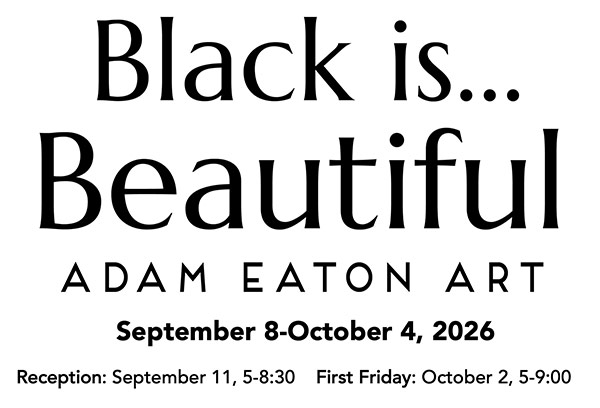
Black is... Beautiful
Adam Eaton
is awarded a Gallery Pick for his photography celebrating the beauty
of Black people and honoring the community that shaped him. In a
departure from our usual practice of highlighting a single
photograph by a guest artist, I wish to recognize how Adam has
orchestrated a collection that is greater than the sum of its parts. The
consistent presentation—white mats within black frames—establishes a
visual rhythm throughout the exhibition. Soft lighting envelops the
subjects without overpowering them, directing our attention to what
Adam wishes us to see. At times, shadow plays an equally important
note. Negative space reinforces the subtle illumination of the
subject, allowing details to emerge that might be lost under fuller
lighting. The
collection spans generations, from babies in utero to an elder
statesman of the Rochester community. Like the varied movements of a
symphony, the photographs range from an intimate study of a face—one
full eye accompanied by portions of the nose, cheek, eyebrow, and a
strand of hair—to wider portraits revealing more of each person and
groupings composed as silhouettes. The
individuals and couples offer a range of expressions and gestures.
Some look directly into the camera, others gaze into the distance,
while still others close their eyes in quiet contemplation. Each
portrait contributes its own voice, yet together they form a
harmonious and vibrant celebration of community, created with love
and honesty and reflecting beauty. Through
this carefully composed ensemble, Adam affirms the central belief of
his practice: “You’re beautiful. You’re a work of art.” Dick
Bennett
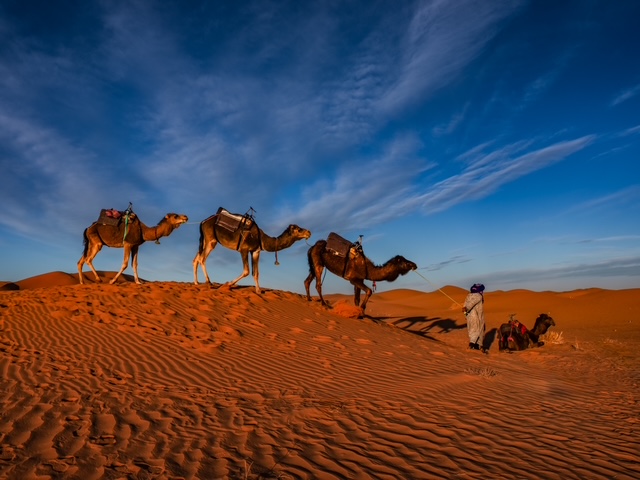
Sahara Desert
Sahara
Desert by Steve Dent
immediately draws me in, not only because of its rich color and
landscape, but because it tells a story. The line of camels moving
across the dunes, led by a lone figure, makes me wonder where they
have come from and where they are headed. Perhaps they are setting
out on a long journey across the desert, carrying supplies from one
village to another, or returning home after a day of travel.
Photographically, I especially like the strong diagonal created by
the caravan as it moves across the dune. The warm orange tones of
the sand contrast beautifully with the cooler blue sky, while the
low light brings out the texture and patterns in the desert. The
careful composition gives the image depth and leads your eye
naturally through the scene. Steve’s image is part of a collection of
photographs he captured during his travels in Africa. They give us a
glimpse into the landscapes, people and experiences he encountered
along the way. Congratulations to Steve on Sahara Desert
being chosen as a Gallery Pick that allows us to imagine the story
unfolding.
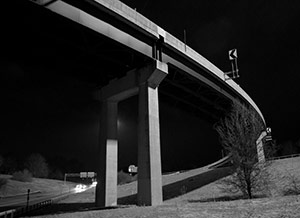
Perfect Arc
Dana has captured a strong, atmospheric black-and-white photograph.
It has a sense of isolation and menace that goes beyond simply
documenting an interchange.
The sweeping curve is the photograph’s great strength. The elevated
roadway enters from the upper left and arcs dramatically toward the
right. That curve gives the image movement and pulls the eye through
the frame. The smaller roadway and cars reinforce that directional
flow.
Dana has used negative space exceptionally well. The enormous black
sky and deep shadows underneath the bridge create a feeling of
emptiness. Rather than being dead space, the darkness becomes part
of the subject. It makes the concrete structures feel imposing.
The two massive vertical supports anchor the image. Their
verticality contrasts beautifully with the sweeping
horizontal/diagonal roadway. The left column also creates a kind of
doorway into the dark space beneath the bridge.
The small cluster of approaching headlights are important. Dana
chose to keep them because without them, the photograph could feel
almost completely static. They provide scale, human presence, and a
tiny point of brightness deep in the composition.
The photograph succeeds because the bridge isn’t merely the
subject; the darkness, scale, geometry, and emptiness turn the
infrastructure into a metaphor for isolation.
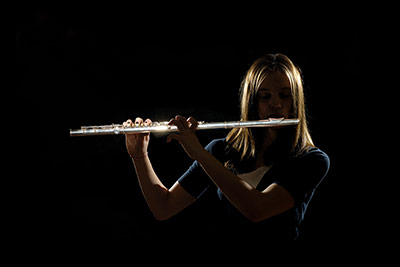
Silver Notes
in the Dark Tom Knauss’s Gallery Pick, Silver Notes
in the Dark, is part of Tom’s display called Every Photograph
is Unique, a collection that explores how the same subject can
be photographed in different and creative ways.
This portrait of a young girl playing the flute immediately drew me
in. The darkness surrounding her allows the silver flute, her hands
and the soft highlights in her hair to emerge almost as if they are
coming out of the shadows. There is a quiet intimacy to the
photography––it feels less like we are simply looking at a portrait
and more like we have been invited into a private moment between the
musician and her music.
Photographs like this can also connect with us through our own
memories and relationships. For me, it brings to mind my
granddaughter, who plays the flute, and the personal association
gives the image an added emotional dimension. Others may be reminded
of a musical performance or perhaps their own experience learning
how to play an instrument.
This is part of what makes portrait photography so powerful. The
person in the photograph may be unfamiliar, yet something about the
gesture, the mood, or the story can feel familiar. Tom has created
lovely portraits that leave room for viewers to bring a little of
their own stories to the photographs. Congratulations, Tom!
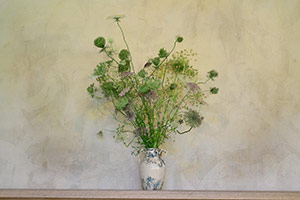
Solitude
Solitude is the work’s greatest strength. By presenting a single
arrangement of flowers against a neutral background, Mike removes
every distraction and allows the subject to occupy the viewer’s full
attention. The pared-down composition reads as an exercise in
essentialism where every element earns its place and nothing
competes for meaning.
The photograph’s muted palette amplifies the photograph’s
contemplative mood. Soft greens, off‑whites, and gentle earth tones
sit harmoniously against the neutral backdrop, creating a tonal
unity that soothes rather than startles. The subdued colors
emphasize texture and form over chromatic drama, which deepens the
sense of calm and introspection.
The intentional symmetry of the vase and flowers placed at the
center of the frame gives the image a measured stillness. That
central axis stabilizes the composition and reads as a visual
metaphor for balance in solitude. The symmetry is not rigid or
clinical; it feels quietly human, as if the arrangement were
composed with care and respect for the subject’s presence.
Everything in the photograph reinforces the title Solitude. The
isolated subject, the soft palette, and the centered composition
together create a feeling of dignified aloneness rather than
loneliness. The image suggests a peaceful retreat into observation
where solitude becomes a space for clarity and quiet appreciation.
Technically the photograph is confident. The neutral background is
rendered with subtle texture that prevents flatness while still
keeping the focus on the flowers. Lighting is controlled and even,
revealing delicate details in petals and ceramic glaze without harsh
contrasts. The framing and negative space are used economically and
effectively.
Solitude is a refined study in restraint. Through simple
composition, a muted color scheme, and careful symmetry, Shoemaker
crafts an image that is both visually elegant and emotionally
resonant. It is a photograph that rewards patience and quiet looking.
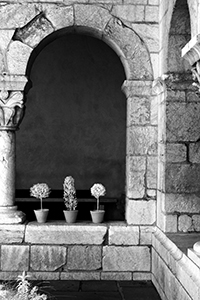
Morning Light
Morning Light
reads as a quietly confident study in contrast and restraint. The
photograph invites a slow look, rewarding patience with subtle
shifts in tone and texture that reveal themselves the longer you
linger. Its calm, measured mood feels intentional and complete.
The composition is admirably balanced, built around a strong central
axis that gives the frame a sense of order and calm. The arch
provides a natural symmetry that organizes the visual field and
creates a pleasing rhythm between foreground and background. That
symmetry is not rigid; small variations in texture and shadow keep
the image from feeling static.
Placing three small subjects on the ledge is a smart
compositional choice that guides the eye across the frame. The two
rounded forms flanking a taller central plant create a visual
cadence that reads like a quiet conversation between shapes. Because
the subjects are modest in scale, the viewer is encouraged to step
closer and appreciate the delicate differences in silhouette and
surface.
The old stone structure does more than contain the scene; it frames
and unifies it. The rough, tactile blocks contrast beautifully with
the smoother, organic plant forms, and the archway acts as a stage
that focuses attention while adding historical weight. The masonry’s
texture and the way light grazes its surfaces tie the elements
together, giving the photograph a cohesive, timeless quality.
Morning Light
succeeds as a contemplative image that uses light, form, and
architectural context to turn a simple moment into something
resonant. It rewards close looking and demonstrates how photographic
choices about tone, symmetry, and framing can transform ordinary
details into a harmonious whole.
By Steve Levinson
Adam Eaton Art
by Steve Dent
By Dana Emery
by Tom Knauss
by Michael Shoemaker
By d dargan teska
Image City Photography Gallery ♦ 722 University Avenue ♦ Rochester, NY 14607 ♦ 585.271.2540
In the heart of ARTWalk in the Neighborhood of the Arts